
Downsizing a parent’s home goes better when the conversation comes before the sorting, and the sorting comes before the move. Families usually do it in the wrong order: they start with the boxes, and the boxes start an argument. This checklist puts the steps in the order that works.
Before I was a professional organizer I was a bedside nurse and then a chronic-care coach. Most of what I know about helping a parent let go of a house I learned in those years, sitting with families who were making decisions under pressure. The house is never really about the house.
Phase 1: The conversation
- Start with what is next, not what is leaving. Talk about the new place, what will fit, and what daily life looks like there. The house gets easier to leave when there is somewhere real to go.
- Ask what matters most. Everyone has five or ten things they cannot lose. Find out what they are before anything is touched. Write them down.
- Agree who decides. If your parent is able to make the decisions, they make them. Your job is to make the decisions easier, not to make them.
- Agree on a pace. One room per session, with a rest between. Decision fatigue is real, and it is worse in the room you raised your children in.
Phase 2: Measure the destination
- Get a floor plan of the new home or apartment and measure the closets.
- Decide which furniture is coming by measuring it, not by remembering it. The dining table usually is not.
- Count the storage: how many drawers, how many feet of hanging rail, how many shelves. That number is your budget for what stays.
Phase 3: Sort in the right order
Start with the rooms that carry the least emotion and the most volume. Confidence builds, and the hard rooms get easier.
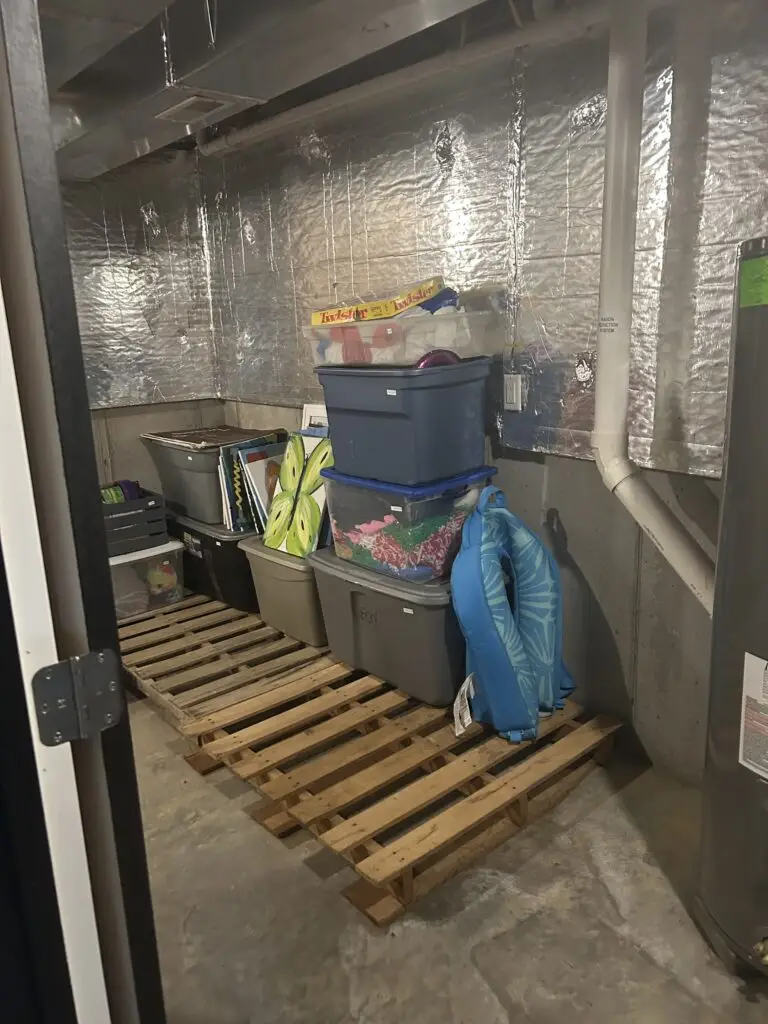
- Garage, basement, storage room. Tools, holiday decorations, boxes that have not been opened since the last move. Fast decisions, big results. Here is what a basement looks like after one of these sessions.
- Kitchen and pantry. Duplicates go, expired goes, and the new kitchen’s cabinet count sets what stays.
- Linen closet, bathroom, laundry. Quick, and the new home needs a fraction of it.
- Bedrooms and closets. Clothes that fit and are worn. Everything else is a donation, a gift to a grandchild, or a keepsake box.
- Papers. Keep legal, financial, medical and tax documents. Shred the rest. This takes longer than anyone expects, so do not leave it for the last week.
- Photos and keepsakes last. By now the pace is set and the hard decisions are fewer.
Phase 4: Decide where things go, one pile at a time
- Coming with them. Fits the measured space. Labeled by room in the new home.
- Going to family. Ask before you assume. A named list avoids two siblings wanting the same lamp.
- Selling. Furniture, tools and collectibles with real value. We can sell on your behalf for a 50% commission, or point you to an estate sale.
- Donating. Leaves the house the same day so the room is finished when the session is.
- Discarding. A large haul may need a truck. Quoted up front.
Phase 5: The move and the first night
- Pack the new home’s kitchen and bathroom first so they can be unpacked first.
- Set up the bed, the chair, the lamp and the medications before anything else goes in. The first night should feel like home, not like a storage unit.
- Hang the same photos in the same order as the old house where you can. Familiar sightlines matter more than square footage.
- Label everything in the new place at eye level for the first month. Finding the coffee filters without asking is dignity.
What not to do
- Do not sort while your parent is out of the house “to spare them.” It is the fastest way to lose their trust.
- Do not argue about a single object. Put it in the “decide later” box and keep moving. Most of those boxes are half empty by the end.
- Do not try to do the whole house in a weekend. Two rooms in a day is a good day.
When to bring in help downsizing a parent’s home
A third person in the room changes the dynamic. We are not the child and not the parent, so the decisions stop being a family negotiation and start being a sorting job. Our senior services cover the decluttering, the packing, the donation runs and the settling in, and our downsizing service works the same way for anyone moving to a smaller home. The first visit is free, and we are happy to meet your parent first, without you, if that is what makes them comfortable.
Questions families ask us
How long does it take to downsize a house?
A typical family home is four to eight sessions over one to two months, one room at a time. Rushing it is the most common mistake.
My parent will not let go of anything. What then?
Start with the rooms that are not about them, like the garage, and let the results do the persuading. Then measure the new home together. Most people will not throw things away, but they will choose what fits.
Do you work with assisted living communities?
Yes. We have organized a senior living community’s own storage and we help residents move in. We work across Northern Kentucky and Greater Cincinnati.
Not sure where to start?
The first visit is free, in your home or over the phone, and you are under no obligation to book anything after it. Book a free assessment, or see real before and after projects across Northern Kentucky and Cincinnati first.